In today’s rapidly evolving digital audio technology landscape, Class-D amplifiers have become the mainstream choice for consumer audio systems such as automotive sound systems, home theater equipment, and flat-panel TVs, thanks to their high efficiency and compact size.
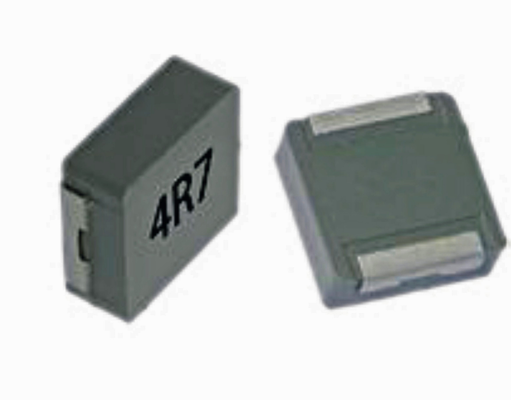
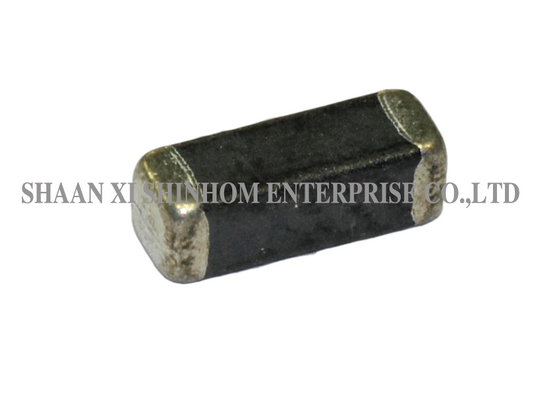
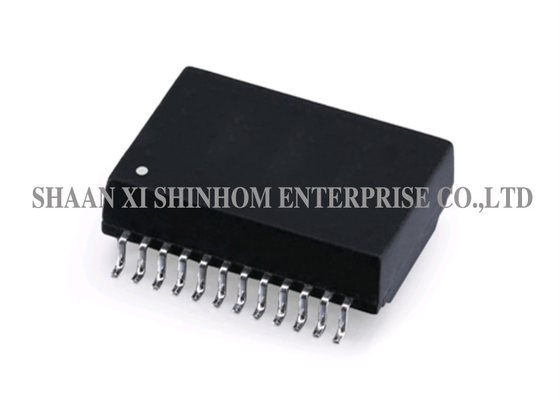
However, the high-frequency switching pulses generated at the output stage must be properly filtered to reconstruct a clean audible signal. The HDA1931A High Current Power Inductor is the core component responsible for this filtering process. Power inductors not only suppress switching noise, but also directly determine key audio performance parameters such as signal purity, dynamic range, and distortion level. Improper inductor selection can prevent even high-performance amplifier ICs from achieving their full sound quality potential.
Why Do Class-D Amplifiers Require “Dedicated” Power Inductors?
Class-D amplifiers generate high-frequency switching signals at the output stage (typically 200 kHz to 1 MHz). A power inductor, together with the output capacitor, forms a low-pass LC filter, which removes the switching carrier and reconstructs the analog audio signal.
However, this filtering process places four major demands on the inductor:
1. High Current Stress
Output stages can reach several amperes of peak current. The inductor must maintain stable inductance under high DC bias conditions to avoid core saturation, which would directly cause audio distortion.
2. Low Loss Requirement
The DC resistance (DCR) generates power loss and heat. Excessive DCR increases temperature rise, reduces efficiency, and limits the maximum output power of the amplifier system.
3. Magnetic Interference Control
Open magnetic structures may produce leakage flux, which can interfere with nearby sensitive circuits and introduce unwanted noise, degrading overall system SNR (signal-to-noise ratio).
4. Audio Fidelity & Linearity
Non-linear magnetic characteristics cause inductance variation under current load, leading to harmonic distortion, which directly affects perceived sound quality and audio clarity.
Key Application Scenarios: From Automotive to Home
Scenario 1: Class-D Digital Audio Amplifiers
This is the core application of the HDA1931A series. As the output choke of Class-D amplifiers, it works together with output capacitors to filter high-frequency switching pulses and reconstruct clean audio signals.
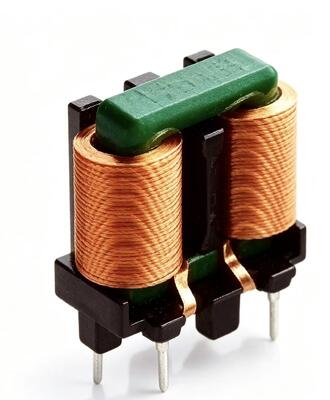
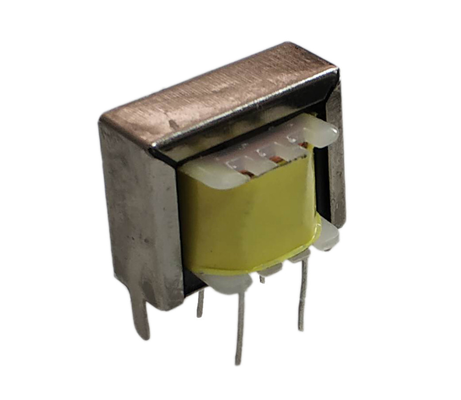
 The series adopts a flat-wire through-hole (DIP) structure, offering higher copper fill factor than conventional round-wire designs. The DC resistance is as low as 4.0 mΩ, while the rated current reaches up to 18 A. In addition, the magnetically shielded structure confines leakage flux within the core, effectively reducing radiated EMI and ensuring high SNR and low distortion audio performance.
Scenario 2: Automotive Audio Systems
Automotive audio environments are highly demanding, with limited space, wide temperature variation, vibration, and strong electromagnetic interference.
The compact DIP package of the HDA1931A series is ideal for space-constrained PCB layouts. Its shielded magnetic structure effectively resists interference from surrounding automotive electronics.
With ultra-low DCR, heat generation is minimized even under high-power operation. Combined with high-temperature-resistant materials (compliant with UL94 V-0 flammability standards), the series is well-suited for harsh in-vehicle operating conditions.
Scenario 3: Home Theater & Flat-Panel TVs
In multi-channel audio systems, consistency between inductors directly affects soundstage accuracy and spatial imaging.
The HDA1931A series provides tight inductance tolerance (±20%) with stable mass production consistency, ensuring excellent channel-to-channel matching.
Its magnetic shielding structure is especially important in compact devices such as flat-panel TVs, effectively preventing leakage flux from interfering with sensitive display driver circuits and wireless modules (e.g., Wi-Fi/Bluetooth), thereby avoiding screen noise or wireless signal degradation.
HDA1931A Series Key Parameter Selection Guide
The HDA1931A series offers four inductance options: 10 μH, 15 μH, 22 μH, and 33 μH (±20% tolerance). The series features an ultra-low DC resistance (DCR) down to 4.0 mΩ, with a rated current range of 10 A to 18 A (based on 40°C temperature rise). The allowable current range is 8 A to 12 A, defined by a 20–30% inductance drop.
| Part Number |
Inductance (μH) |
DCR (mΩ) |
Rated Current (A) |
Saturation Current (A) |
| HDA1931A-100M |
10 |
4.0 |
18 |
8 |
| HDA1931A-150M |
15 |
4.5 |
15 |
8 |
| HDA1931A-220M |
22 |
5.6 |
12 |
9 |
| HDA1931A-330M |
33 |
8.2 |
10 |
10 |
Conclusion
From Class-D digital audio amplifiers to automotive sound systems, and from 5.1 home theater systems to flat-panel TVs, the HDA1931A series high-current power inductors provide a reliable core component foundation for high-fidelity audio systems. With a flat-wire winding structure, magnetically shielded design, ultra-low DCR, and wide-frequency performance, the series is engineered to meet the demanding requirements of modern audio power stages.
For engineers designing high-performance Class-D audio systems, choosing the HDA1931A series means:
-
🎧 Lower distortion and cleaner sound reproduction
-
⚡ Higher system efficiency and reduced thermal loss
-
🛡️ Improved EMI performance and simplified EMC design challenges

 Your message must be between 20-3,000 characters!