Compact Wire Wound Common Mode Filter for High-Speed Interface EMI Suppression in Space-Constrained Applications
Product Description
Compact Wire Wound Common Mode Filter Series for High-Speed Interface EMI Suppression
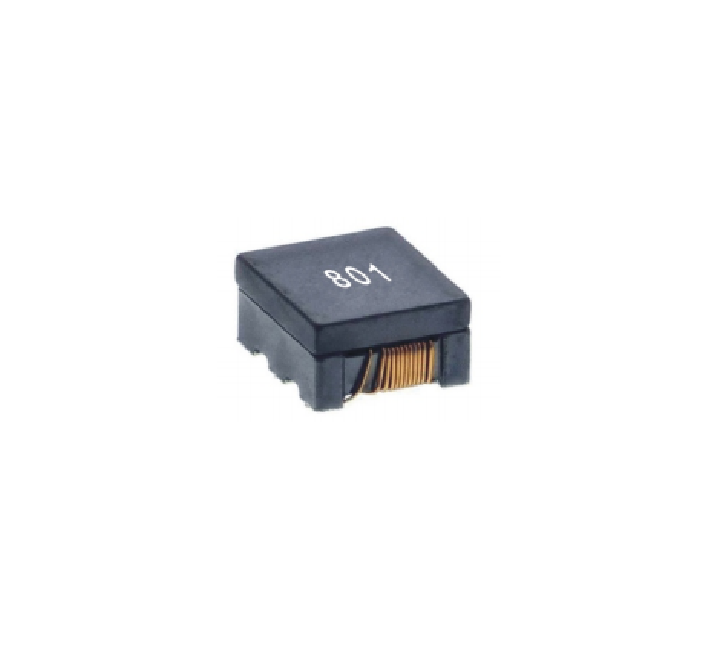
Engineered to provide reliable noise filtering in space-constrained applications, the SF1210F-3W series offers a selection of high-performance common mode filters in a compact footprint. Utilizing wire wound chokes construction, this series delivers essential EMI suppression components functionality with common mode impedance options of 160Ω, 240Ω, and 500Ω at 100MHz. Designed for ease of integration, it includes recommended PCB layout and stencil patterns to ensure optimal performance and manufacturability. Fully compliant with RoHS and halogen-free standards, it operates reliably across a -40°C to +125°C temperature range.
Key Features
Common Mode Impedance (@100MHz): 160Ω, 240Ω, or 500Ω (±25%, model dependent)
DC Resistance (DCR): As low as 0.21Ω (max)
Rated Current: Up to 500mA (max)
Rated Voltage: 50 Vdc (max)
Withstand Voltage: 125 Vdc (max)
Insulation Resistance: 10 MΩ (min)
Construction: Wire wound type for robust high-frequency performance
Design Support: Includes recommended PCB land pattern and solder paste stencil aperture
Operating Temperature: -40°C to +125°C (including self-temperature rise)
Applications
EMI filtering for high-speed differential data lines (e.g., USB 3.0/3.1, HDMI, DisplayPort, MIPI)
Noise suppression in portable and wearable consumer electronics
Signal integrity enhancement in communication modules (Wi-Fi, Bluetooth)
Power line filtering in low-current digital circuits and sensors
Board-level EMC solutions in networking equipment and set-top boxes
Frequently Asked Questions
How do I choose between the 160Ω, 240Ω, and 500Ω impedance models?
The choice depends on the frequency and amplitude of the common-mode noise you need to suppress. Higher impedance provides greater attenuation at the test frequency (100MHz). Consider your specific EMI profile and compliance requirements. The 500Ω model offers the strongest suppression at 100MHz.
Why are the recommended PCB layout and stencil patterns important?
These recommendations help optimize the filter's high-frequency performance by minimizing parasitic effects and ensure reliable, consistent solder joints during surface-mount assembly, reducing manufacturing defects.
Can this series be used for power line filtering?
Yes, but note the rated current (max 500mA). It is suitable for filtering noise on lower-current power rails or signal lines with DC bias. For higher current power lines, ensure the selected model's current rating is not exceeded.
What is the benefit of the wire-wound construction in this context?
Wire-wound construction typically allows for higher common-mode impedance and better performance at high frequencies compared to some multilayer ceramic filters, making it more effective for suppressing EMI in fast digital interfaces.