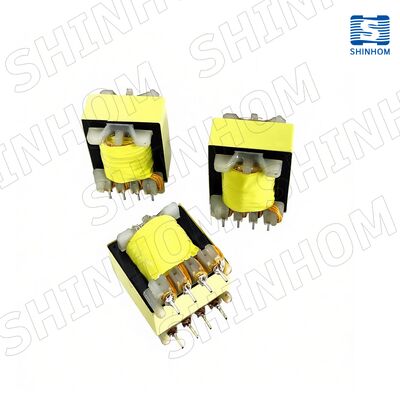
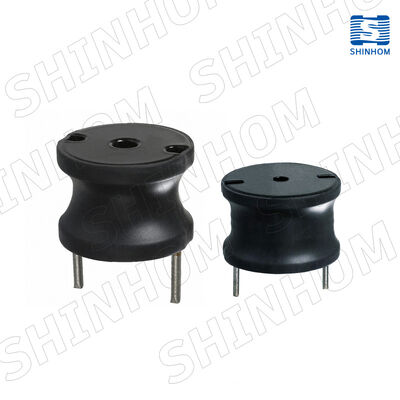
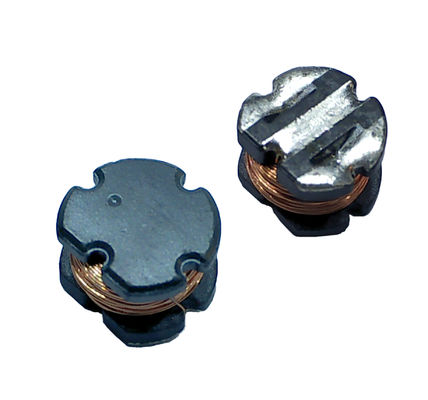
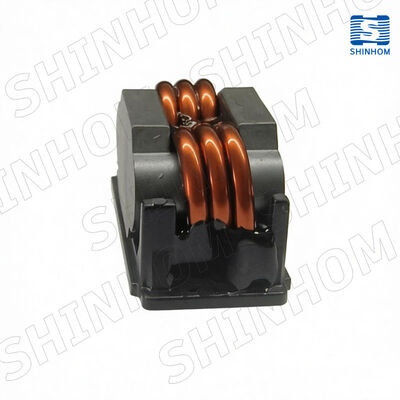
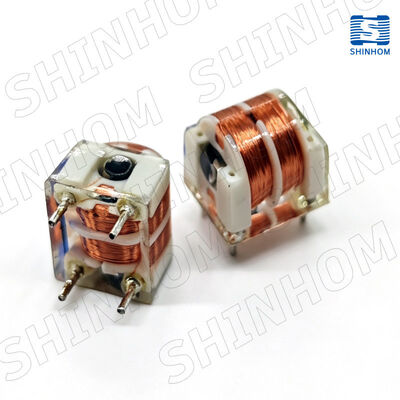
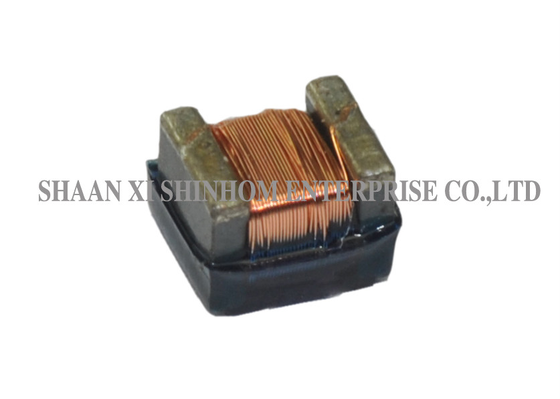
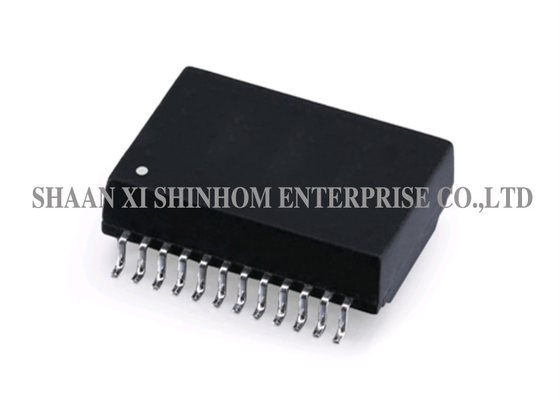
1:1 transmission line balun RF transformer is designed for broadband wireless communication and RF signal conversion applications. It uses a transmission line structure to achieve balanced/unbalanced signal conversion, offering wide frequency coverage and excellent amplitude/phase balance characteristics.The product uses an SMD package with low main-line loss and excellent input return loss performance, ensuring high signal transmission efficiency and low reflection.It is widely used in push-pull amplifiers, antenna systems, and broadband matching networks in RF applications. It is an ideal choice for broadband wireless communication and RF front-end signal conversion.
Features:
Applications
Broadband wireless communication
VHF/UHF receivers
VHF/UHF transmitters
Push-pull amplifiers
Antenna systems
RF front-end modules
Broadband impedance matching
Test and measurement equipment
ELECTRONICAL SPECIFICATIONS(25℃,Z=75Ω)
| Parameter | Test Conditions | Units | Min | Typ | Max |
| Main line Loss(out1) | 5-100MHz | dB | - | 0.5 | 1.5 |
| Main line Loss(out2) | 5-100MHz | dB | - | 1.0 | 2.0 |
| Amplitude Balance | 5-100MHz | dB | - | ±0.5 | ±0.5 |
| Phase Balance | 5-100MHz | Degrees | - | ±1.0 | ±3.0 |
| Input Return Loss | 5-100MHz | dB | 10.0 | 15.0 | - |
![]()
![]()
![]()
![]()
FAQ
Q: What is the difference between a transmission line balun and a traditional wire-wound balun?
A: A transmission line balun uses transmission line theory to achieve broadband matching and balanced/unbalanced conversion, offering wider frequency coverage (50-1250MHz) and better high-frequency performance. A traditional wire-wound balun relies on magnetic core coupling, offering good low-frequency performance but limited high-frequency response. The transmission line structure is suitable for broadband and high-frequency applications.
Q: What is the impact of insertion loss ≤1.3dB and input return loss ≥11dB on system performance?
A: Insertion loss ≤1.3dB ensures high signal transmission efficiency with low energy loss. Input return loss ≥11dB (typical 25dB) ensures good impedance matching, reducing signal reflection and standing waves, improving overall system performance. It is especially suitable for wireless communication systems with strict link budget requirements.
Q: How to apply for samples? What is the lead time?
A: You can submit a sample application through our website or email. Please provide your company information and target model. Samples are free of charge and will be shipped within 3-5 working days. Mass order lead time is generally 2-8 weeks. MOQ and lead time for custom products will be confirmed separately.