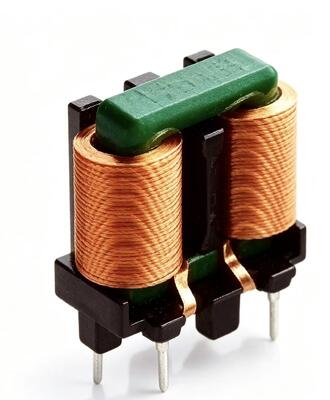
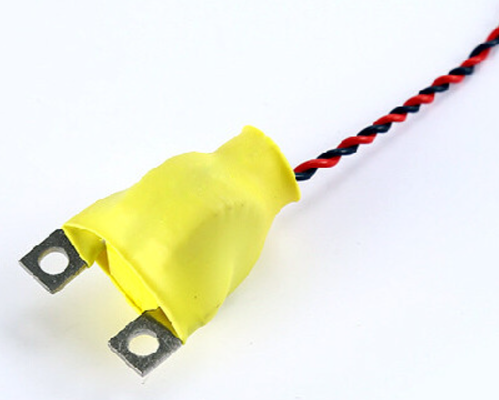
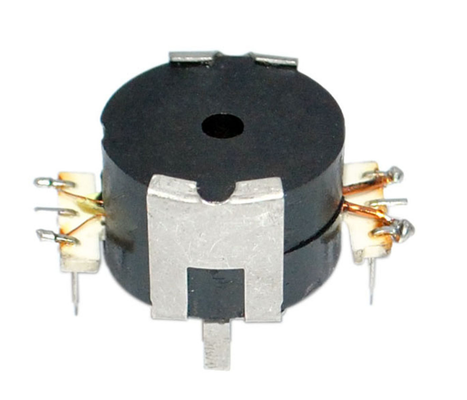
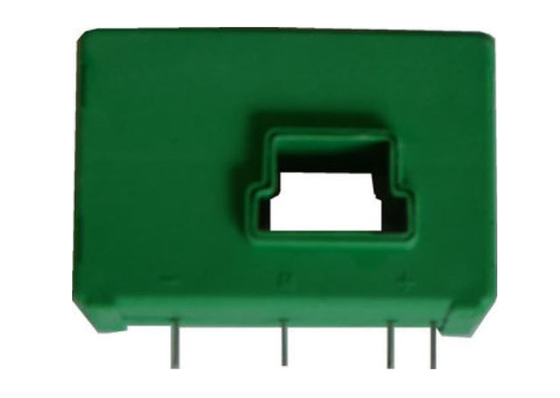
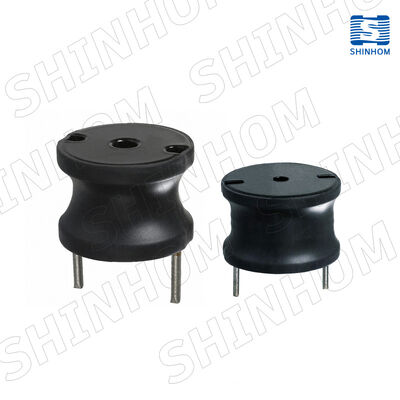
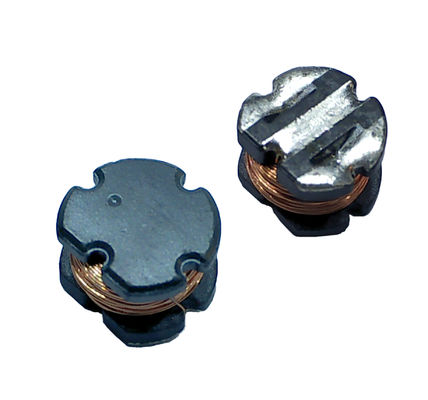
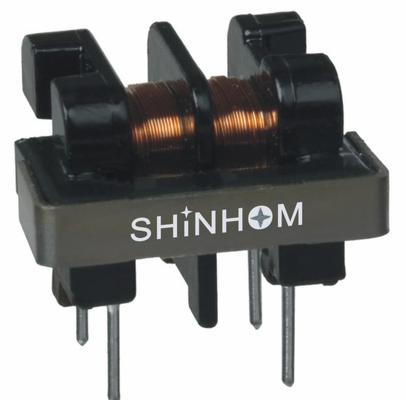
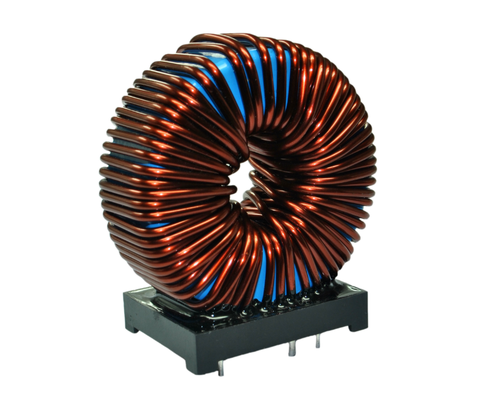
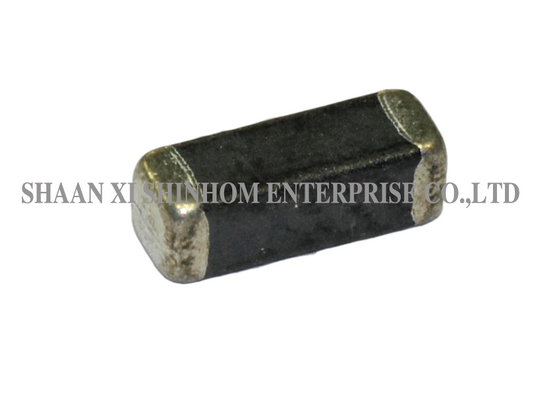
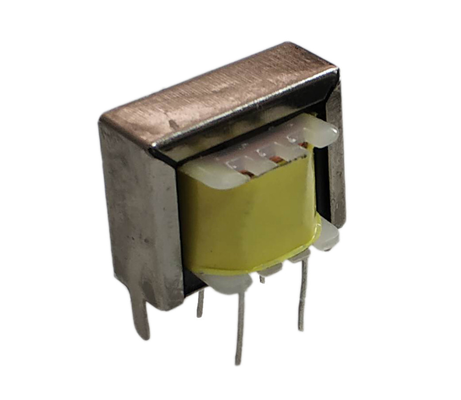
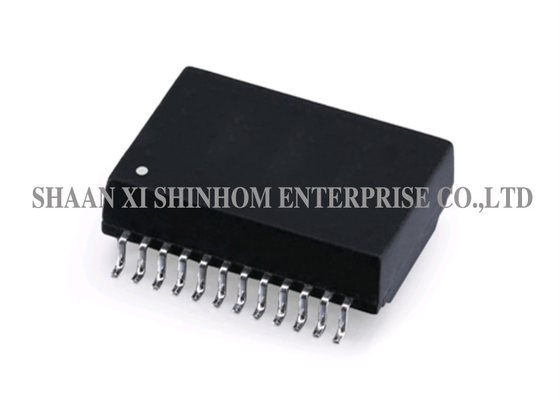
The 1:4CT SMD balun RF transformer is designed for broadband wireless communication and RF signal conversion applications. It uses a flux-coupled structure to achieve impedance transformation and balanced/unbalanced signal conversion, offering wide frequency coverage and excellent amplitude/phase balance characteristics.The product uses an SMD package with low main-line loss and good input return loss performance, ensuring high signal transmission efficiency and low reflection.It is widely used in VHF/UHF receivers/transmitters, push-pull amplifiers, antenna systems, and broadband matching networks in RF applications. It is an ideal choice for impedance transformation and signal conversion in 75Ω systems.
Broadband wireless communication
VHF/UHF receivers
VHF/UHF transmitters
Push-pull amplifiers
Antenna systems
RF front-end modules
Broadband impedance matching
Test and measurement equipment
| Parameter | Test Conditions | Units | Min | Typ | Max |
| Main line Loss(out1) | 1-350MHz | dB | - | 0.8 | 1.5 |
| Main line Loss(out2) | 1-350MHz | dB | - | 0.7 | 1.5 |
| Amplitude Balance | 1-350MHz | dB | - | 0.3 | ±0.5 |
| Phase Balance | 1-350MHz | Degrees | - | ±1.0 | ±5.0 |
| Input Return Loss | 1-350MHz | dB | 10.0 | 16.0 | - |
![]()
![]()
![]()
![]()
Q: How to apply for samples? What is the lead time?
A: You can submit a sample application through our website or email. Please provide your company information and target model. Samples are free of charge and will be shipped within 3-5 working days. Mass order lead time is generally 2-8 weeks. MOQ and lead time for custom products will be confirmed separately.
Q: Do you support small trial orders?
A: Yes. We understand the verification needs of customers in the early stages of new product development. Small trial orders (below the standard MOQ) can be negotiated. Trial orders receive the same quality standards and delivery commitments as mass orders. Please contact our sales team for details.
Q: How does the 1:4CT balun transformer achieve impedance transformation from 75Ω to 300Ω?
A: It uses a flux-coupled structure to convert a 75Ω single-ended signal to a 300Ω differential signal (or vice versa), suitable for matching a 75Ω system to a 300Ω differential load.
Q: What is the impact of amplitude balance ±0.5dB and phase balance ±5° on push-pull amplifiers?
A: These specifications ensure the differential signals have consistent amplitude and precise phase inversion. This effectively suppresses even-order harmonics, improves common-mode rejection ratio, reduces signal distortion, and enhances amplifier linearity.