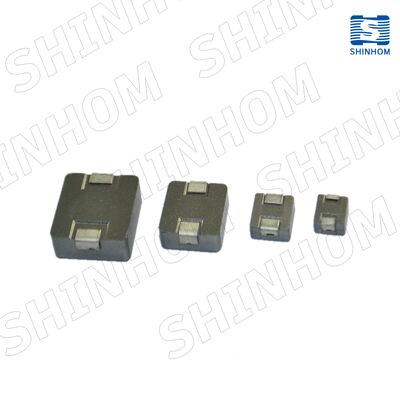
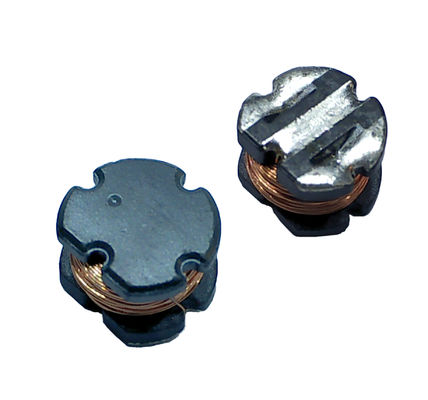
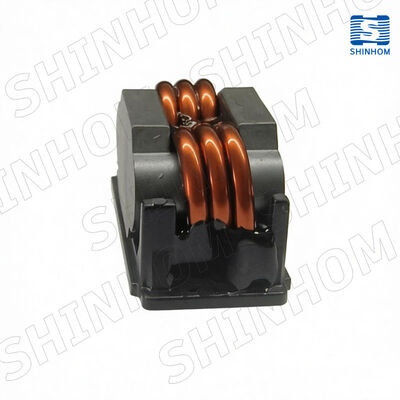
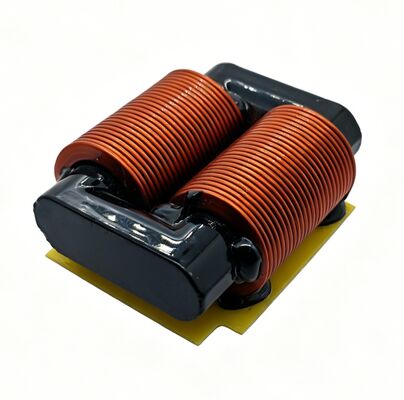
SMD Wire Wound Common Mode Filter SF1812 Series Impedance 80-1000Ω for High Speed Digital Signal Lines

100
MOQ
SMD Wire Wound Common Mode Filter SF1812 Series Impedance 80-1000Ω for High Speed Digital Signal Lines
Features Gallery Product Description Chat Now
Features
Specifications
Voltage: +0.5%,-0.5%
Output Power: 32mW
Safety Factor Rating: (FS)<10
Inner Window: 32.0mm
Burden: 2.5VA
Output Cable: 2.5M , 5M, 10M
Highlight:

SMD Wire Wound Common Mode Filter

,

Wound Common Mode Filter SF1812

Basic Infomation
Place of Origin: China
Brand Name: SHINHOM
Certification: RoHS/ISO/UL/CE/IATF16949/CNAS
Model Number: SF1812
Document: SF1812 Series.pdf
Payment & Shipping Terms
Delivery Time: 2~8weeks
Payment Terms: T/T,L/C
Product Description

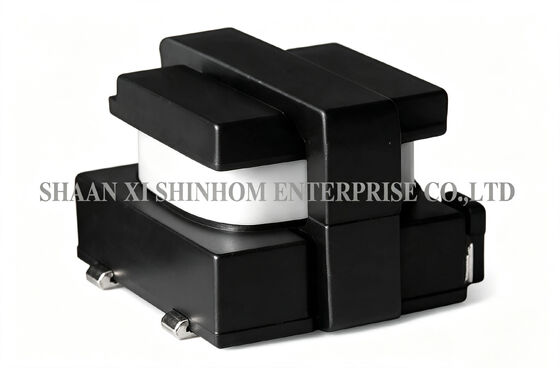
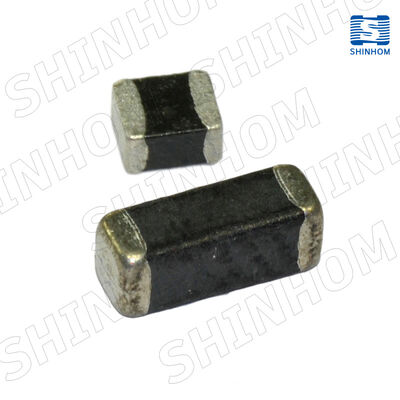
The SF1812 series SMD wire-wound common-mode filter is designed for common-mode noise suppression on signal lines of high-speed digital equipment. The product offers high common-mode impedance at high frequencies. It effectively filters common-mode interference on signal lines, ensuring signal transmission integrity. It uses a wire-wound structure and a standard 1812 SMD package, suitable for automated surface-mount production. Impedance range: 80Ω to 1000Ω. Rated current: up to 2.0A. DCR: as low as 0.07Ω. It is widely used for signal line EMI suppression in personal computers, peripheral devices, and various high-speed, high-density digital equipment.

Features
  • Common-mode impedance – 80Ω to 1000Ω (±25%)
  • Test frequency – 100MHz
  • DC resistance – as low as 0.07Ω
  • Rated current – up to 2.0A
  • Rated voltage – 50V
  • Insulation resistance – 10MΩ min.
  • Operating temperature – -40°C to +85°C
  • Storage temperature – 40°C max., humidity ≤70%RH
Applications
  • Personal computer motherboard signal lines
  • Computer peripheral data lines
  • High-speed digital equipment interfaces
  • USB data line common-mode noise suppression
  • HDMI/DVI signal line filtering
  • LAN (Local Area Network) interfaces
  • Industrial control signal lines
  • Consumer electronics data interfaces

Product Specification Selection Table

Model Impedance (Ω) ±25% DCR Max (Ω) Rated Current Max (A) Rated Voltage (V)
SF1812-800 80 0.07 3.0 50
SF1812-121 120 0.07 3.0 50
SF1812-201 200 0.10 2.0 50
SF1812-601 600 0.30 1.5 50
SF1812-801 800 0.35 1.0 50
SF1812-102 1000 0.40 1.0 50
FAQ

Q: How does a common-mode filter suppress noise?

A: A common-mode filter has two windings with the same number of turns (signal line and return line) wound on the same core. Differential-mode signals (useful signals) generate opposing magnetic fluxes in the two windings, which cancel each other out and pass through with almost no attenuation. Common-mode noise (interference signals) generates fluxes in the same direction, which are absorbed by the core and converted into heat, effectively suppressing common-mode interference.

Q: How to choose the impedance value for a common-mode filter?

A: Higher impedance provides stronger common-mode noise suppression. However, excessive impedance may affect signal integrity, especially for high-speed signals. We recommend choosing based on system EMI test results and signal frequency. Generally, 600-1000Ω is recommended for USB/LAN interfaces, while 80-200Ω is suitable for low-speed signals. Our company can provide professional selection recommendations.

Q: How to understand the rated current parameter of this product?

A: The rated current (e.g., 3.0A for 80Ω/120Ω models, or 2.0A for 200Ω models) is the maximum continuous DC or AC RMS current the filter can handle. When selecting, ensure the maximum operating current of the signal line does not exceed the rated value to prevent core saturation, which would reduce filtering performance.

Recommended Products
Get in touch with us
Contact Person : Jack wang
Tel : 13909218465
Fax : 86-029-87851840
Characters Remaining(20/3000)